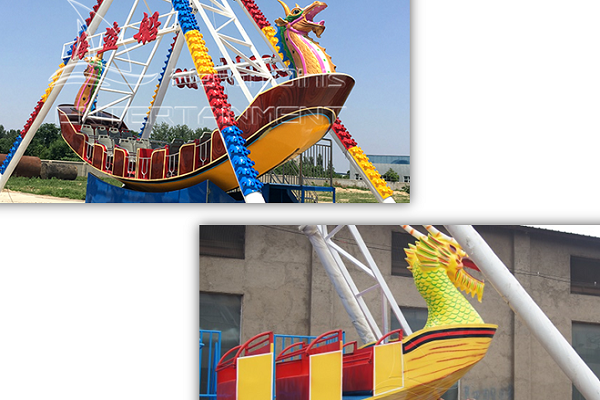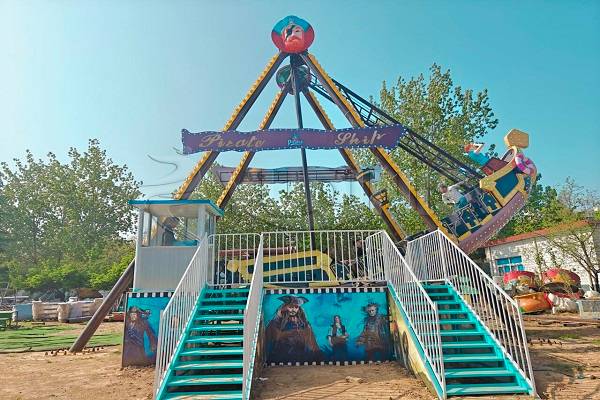
Buyers often assume that the largest pirate ship they can afford is the best choice, yet many successful venues run the smaller model for years and never regret it. Capacity is only one variable among footprint, power supply, foundations and the atmosphere of the ride. This guide explains when the 24 seat vs 40 seat pirate ship comparison comes out in favour of the smaller machine.
Compare Capacity With Real Demand
A larger ship earns more only when the demand exists to fill it consistently. If the ride runs with twenty passengers on a busy Saturday, the extra seats represent idle structure for the rest of the year while still carrying the higher purchase price and the larger maintenance obligation. Parks with modest footfall, seasonal opening or an audience that prefers many short rides often achieve better results per seat from the smaller model.
Match the Footprint to the Space Available
The swept area grows with the length of the gondola, and so does the fence line, the queue space and the clearance required around the structure. A 24-seat ship can be installed in a plaza that would never accommodate a 40-seat machine, which makes it the practical choice for shopping centres, compact family entertainment centres and parks where the available land sits between two existing attractions.
Consider Power, Foundations and Installation
Smaller ships draw less power, need less concrete and can often be installed without piling. Where the supply is limited or the ground is difficult, that difference decides the project timeline rather than the ride itself. Buyers who are choosing a 24 seat pirate ship ride should still obtain the load schedule and foundation drawing, because the base requirements follow the model and the swing angle rather than the seat count alone.
Compare Operating Cost and Staffing
Every ride has a fixed operating cost: an operator, an inspection routine, consumables and the electricity to run the cycle. A smaller ship needs the same number of staff as a larger one but produces less wear on the drive, the brakes and the structure, which lengthens the interval between major overhauls. Over several seasons that difference becomes a real contribution to the ride’s profitability, especially at venues where labour is expensive.
Think About Atmosphere and Ride Experience
Ride feel matters to guests as much as capacity. A smaller gondola swings more sharply and feels more dynamic, which suits younger riders and thrill-seeking groups, while a larger ship gives a slower, more majestic motion that families prefer. Reviewing the larger 40 seats pirate ship ride configuration alongside the smaller model shows how the arc changes with length, and that comparison usually makes the right choice obvious for a specific venue.
Plan for Growth and Replacement
Finally, consider how the decision ages. A park that expects to grow steadily may be better served by installing the smaller ship first, learning how guests use it and adding a second ride later, rather than borrowing against a large machine that sits half empty through the early seasons. Where a ride is bought for a rented site or a temporary event, the smaller model also moves, stores and reinstalls far more easily. Reference material on the swing ride capacity of pendulum attractions explains why the motion and the loading pattern, not just the seat count, shape the guest experience.
The 24-seat ship is often the better investment when demand is moderate, space is tight, the power supply is limited or the venue is rented rather than owned. Measure real demand, match the footprint to the site, compare installation and operating costs, consider how the ride feels, and plan for growth rather than speculation. Buyers can review the models from Top Ride Sale pirate ship ride supplier and start from the product page at https://www.topridesale.com/24-seats-pirate-ship-ride-for-sale/.