Choosing safe water play equipment is the foundation of a successful children’s water park. Features that look colorful and inviting must also resist outdoor conditions, support clear supervision, suit the intended age groups, and connect correctly to the water-treatment and circulation systems.
Choosing How much does it cost to build a water park is only one part of the decision. The buyer should compare design, materials, guards, controls, installation, maintenance access, and documentation as one package. A low equipment price is not useful if it leaves out components required for safe daily operation.
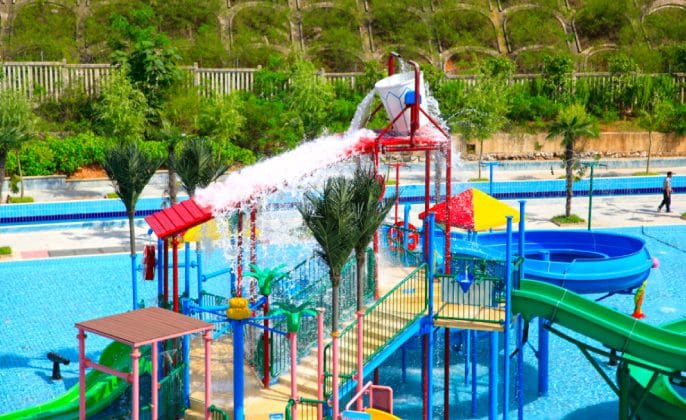
Begin with the Age Groups and Supervision
A water playground may serve toddlers, older children, and caregivers in the same visit. Their needs differ. Younger children require gentle features, shallow water, close supervision, and clear boundaries. Active play should be separated where possible so fast movement does not pass through the toddler zone.
Layout should provide clear sightlines from seating and entrances. The operator should be able to see the complete water area, gates, controls, and emergency route. A product that fits the footprint but blocks caregiver views is not a safe choice.
Define Safety Requirements Before Choosing Products
Local regulations and the attraction’s risk assessment establish the minimum requirements. The equipment specification should address access, entrapment risks, sharp edges, pinch points, stable bases, handholds where applicable, drainage, electrical protection, water quality, and emergency shutdown.
Ask the supplier to identify which standards or approvals apply and how the equipment demonstrates compliance. Review how water park equipment safety standards relate to the finished local installation. The buyer should pass those documents to the local designer and authority rather than assuming a product is automatically accepted.
- Confirm the intended age and height range for every feature.
- Review access and egress around wet play positions.
- Check guards, covers, fixings, and exposed edges.
- Confirm electrical enclosures and emergency controls.
- Include water-testing and shutdown procedures.
Treat the Play Equipment and Water System Together
Safe water play depends on the quality of the water as well as the shape of the toy. Each nozzle and feature must connect to a system that delivers adequate flow without collecting stagnant water. Controls should allow thorough cleaning and maintenance.
The supplier should provide a layout and hydraulic schedule showing how the selected products work together. Ask about pump capacity, filter design, disinfection, storage, backwashing, and isolation valves. The finished installation must be practical for the staff who will test and operate it daily.
Check Materials and Surface Conditions
Equipment should tolerate continuous moisture, sunlight, cleaning products, and normal child contact. Corners should be formed and finished consistently, and service covers should remain secure. Replacement nozzles and fasteners should be accessible without dismantling large sections.
Some components may use Thermoplastic polyurethane for flexible protective elements or surface details where the manufacturer confirms suitability. Material selection must match the approved design and maintenance plan. No substitute should be accepted only because it is locally available.
Surfacing and drainage are part of the safety system. The surface should provide suitable grip when wet, drain as designed, and remain compatible with the water-treatment arrangement. Steps, transitions, and edges should be visible and controlled.
Review Features as a Set
A small area can become crowded when every feature encourages children to enter the same space. Place high-activity elements away from quiet play and main walking routes. Keep interactive controls at an understandable height and make sure failure of one feature does not create an unsafe condition.
| Equipment area | Safety question | Operating question |
|---|---|---|
| Spray nozzles | Stable mounting and protected edges | Can each nozzle be cleaned or replaced? |
| Interactive controls | No trapping, sharp, or fragile parts | Can staff lock out a faulty control? |
| Themed structures | Access, fall protection, and sightlines | Can surfaces be inspected daily? |
| Treatment plant | Guarded from guest contact | Are alarms and isolation clear? |
| Surfacing and drains | Slip resistance and drainage | Can covers be checked and cleaned? |
Plan Installation and Commissioning
Installation quality affects safety. Nozzles must be aligned, covers secured, electrical equipment protected, and drainage falls built as designed. The supplier should provide installation drawings and clear responsibilities for foundations, utilities, and final connections.
Commissioning should include pressure and flow checks, treatment tests, control alarms, emergency shutdown, all play features, drainage performance, and inspection of every accessible edge and fixing. Staff need practical training before opening.
Use a documented handover
The handover pack should include the approved layout, operating limits, inspection schedule, water-testing instructions, electrical information, spare-parts list, and training record. Confirm that the documents match the equipment actually installed rather than an earlier concept design.
Compare Suppliers on Evidence
A proposal should explain how each item has been evaluated for the intended use. Ask the team responsible for Dinis water playground team to provide relevant drawings, material details, maintenance information, and a realistic operating scope. Reviews should include the park’s technical and operations staff.
If the available information is incomplete, request clarification rather than marking the item safe by assumption. To compare splash pad equipment choices and compare complete packages, use a common review sheet covering equipment, treatment, surfacing, installation, documentation, and support. A water playground equipment supplier can help coordinate those interfaces.
Maintain Safety After Opening
Daily checks should cover the play area, water clarity, treatment readings, gates, controls, drainage, and any damaged parts. Staff should know when to close the attraction and who can approve repairs. Faults should be recorded and tracked until closed.
Keep spare nozzles, seals, fasteners, and other critical parts available. Review incident and maintenance records to identify recurring problems. A safe park is not created only on opening day; it depends on consistent operation and a supplier relationship that supports corrective action.
Safe equipment starts with the right site, design, and operating team. Compare products on documented suitability, not appearance alone, and keep the full water system in every decision.