Hilly ground is often the cheapest land available, and it can also be the most interesting site for an unpowered park, because slopes naturally create views, levels, and play opportunities. The challenge is planning; gradients that look attractive on a survey can complicate paths, drainage, and equipment foundations. This guide explains how to approach outdoor unpowered park planning on uneven land so the design stays safe, affordable, and attractive to visitors.
Start with an Accurate Topographic Survey
Before any design work, measure the site properly: contour levels, high and low points, water flow paths, soil type, and access points. A detailed survey lets the design team decide which areas should be terraced, which should stay natural, and where retaining structures are unavoidable. Skipping this step is the most common cause of budget overruns, because ground works discovered later are far more expensive than those planned from the beginning.
Use Terraces Instead of One Flat Platform
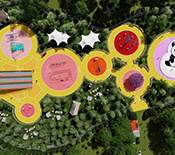
Rather than flattening an entire hillside, experienced designers create a series of terraces. Each level hosts a different attraction – a slide zone, a climbing area, a toddler playground, a picnic terrace – connected by stairs, ramps, and gently graded paths. Terraced layouts reduce earthmoving cost, preserve the natural character of the landscape, and prevent water from collecting in one large area. They also create natural separation between age groups, which parents appreciate. The overall result is a sloped land amusement park design that feels deliberately designed rather than levelled.
Plan Drainage and Retaining Structures Early
Water always moves downhill, so drainage must be designed before equipment positions are fixed. Surface channels, French drains, and permeable play surfacing prevent erosion and keep structures stable. Retaining walls should be engineered for soil pressure and, where possible, terraced rather than built as one tall wall. On larger projects, a completed reference helps: the non-powered adventure park case study shows how a large site can be organised into zones without excessive ground works.
Design Accessible Paths and Safe Fall Zones
Accessibility is a legal and commercial requirement. Gradients on main circulation routes should stay gentle enough for wheelchairs, strollers, and elderly visitors, with steps used only as shortcuts. Play equipment must sit on level platforms with impact-absorbing surfacing extending to the recommended fall distances, and slopes immediately below equipment need protection against rolling or sliding. Clear sight lines from seating areas let parents supervise several zones at once.
Anchor Equipment to the Terrain Correctly
Every structure needs foundations designed for its loads and for the soil conditions on that specific terrace. Anchorage on slopes often requires deeper footings on the downhill side or engineered platforms. Coordinate the equipment layout with the structural engineer so that slide exits, climbing nets, and zip lines follow the natural gradient rather than fighting it. This is where a slope becomes an advantage: downhill slides and rope courses feel more exciting while using less steel and support structure.
Control Cost with Phased Construction
Sloped sites can be developed in phases: open the lower terraces first while the upper levels are prepared, then expand as attendance grows. Phasing spreads capital expenditure, allows early revenue, and reduces the risk of a single large construction season. Keep a realistic contingency for ground works, because soil conditions are rarely uniform across a hillside site.
With careful surveying, terracing, and drainage planning, uneven land becomes a distinctive and cost-effective location for family attractions. Work with an experienced Dinis park solution supplier that handles design, equipment, and installation as one project, and study how the modern outdoor adventure playground uses natural terrain to create memorable play. To discuss layouts, budgets, and site surveys, visit https://themeparkprojects.com/outdoor-unpowered-amusement-park-solution/ and request a tailored plan.